
A number of insurers offer health policies designed especially for senior citizens.

The biggest let down for India's aviation sector has been the failure of the government to privatise Air India, says Anjuli Bhargava.

Universal basic income or social security? Economist Nitin Desai feels we need a blueprint for universal health care and pensions to help the vulnerable section.
'The most fundamental flaw with the electoral bond scheme is that it is designed to make anonymous donations.' 'It makes it easy for black money holders as well as corrupt corporates to donate money to the ruling party and ask for a quid pro quo without anybody getting any idea about it.'
It was better to first build a single-rate GST with a low rate, achieve full mastery of this, and then consider more complex possibilities such as high rates and multiple rates.
A moderate GST rate obviates the need for the two-rate structure.

Country's largest airline has set up a centralised unit to minimise disruptions.
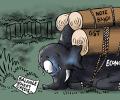
'The current budgetary practice of shifting expenditures off-balance sheet in order to be seen to be meeting fiscal targets should be discontinued; additional fiscal stimulus would be imprudent; individual income tax rates should not be cut; GST rates should not be raised now,' advise Arvind Subramanian and Josh Felman.

The GST has been a great achievement, but it does suffer from weaknesses, says Chief Economic Adviser Arvind Subramanian.

An integrated team of 200 staff crunches data to minimise disruption for 149 planes, but airport infrastructure poses a challenge

After the 2019 election, one thing is sure: GST will see a number of changes, explains Indivjal Dhasmana.
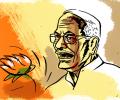
'Whoever whispered in his ears that go for demonetisation, misled him completely' and the PM lacked the sagacity to know that it would not work, Yashwant Sinha tells Archis Mohan.

Most customers still don't understand this concept and are unable to benefit from it.
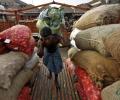
Retired banker P Balagopala Kurup says one of the reasons he favours inflation targeting is that its first priority is to insulate the lesser fortunate citizens from adversity and in the process to ensure that the economy retains its inherent vibrancy and strength.
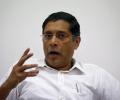
Chief Economic Advisor Arvind Subramanian says that he hopes GDP growth will be at the upper end of the 7-7.5 per cent range.

In its essence, GST is a national level system of value added taxation of goods and services, says Shankar Acharya.

Cashless transactions need ubiquitous connectivity, which we don't have. And connectivity needs political and administrative convergence, says Shyam Ponappa.

Inflation targeting framework is now enshrined as a formal agreement by the government and the RBI; thus, it may seem that we are flogging a dead horse, says Soumya Kanti Ghosh.
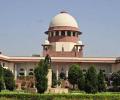
The nullifying of the NJAC Act has put the spotlight on the Judiciary. Concepts like transparency, being open to change, leading from front, management of perceptions that were reserved for the Executive earlier are now relevant for the Judiciary as well, says Sanjeev Nayyar.

It is time to take the sainthood away from Dr Manmohan Singh, says Sudhir Bisht.
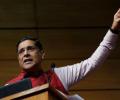
Chief Economic Advisor Arvind Subramanian spoke on a wide range of issues -- from GDP growth and fiscal consolidation to job creation and GST.
.jpg)
Can the leaky public distribution system, or PDS, deliver the subsidised grain to two-thirds of the population?

PM said Kovind will make an 'exceptional President'.
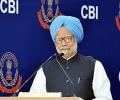
You just cannot let an institution go adrift and never reporting to any other institution and never submitting itself to any monitoring review or evaluation with regard to its functioning and particularly with regards to an institution which has dominion over the lives and liberties of citizens. That kind of total abdication of government responsibility with regard to that kind of an institution will be dangerous to democracy itself, to the people, Bahukutumbi Raghavan tells Sheela Bhatt
